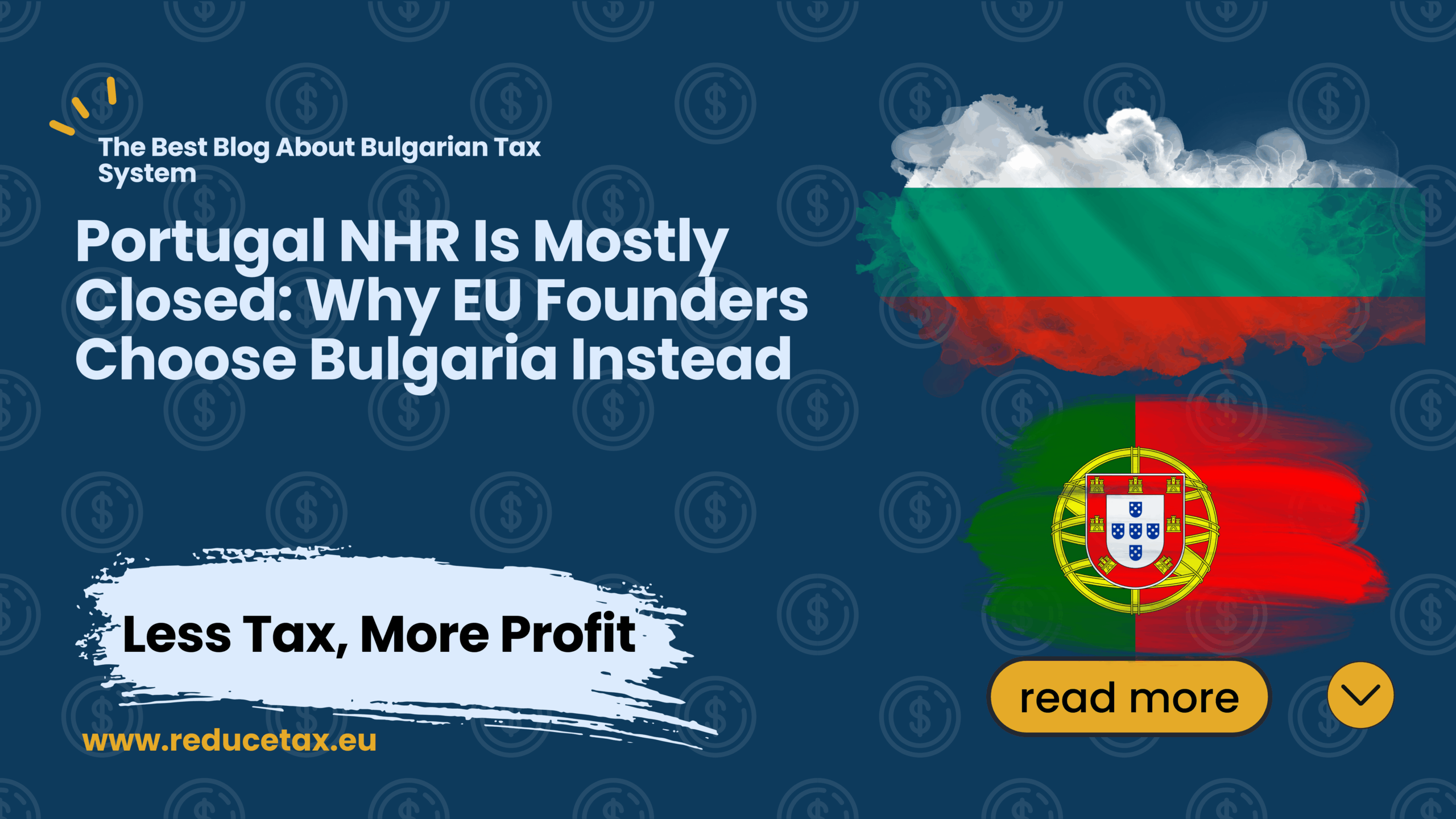
Portugal NHR Is Mostly Closed:
Why EU Founders Choose Bulgaria Instead
Portugal used to be the obvious choice for many EU founders. People heard "Portugal 10%" and assumed it was a simple low-tax setup for business owners. Today, that story is much harder to use for most new movers.
At the same time, founders in Germany, France, Belgium, and Italy are feeling the same pain: high taxes reduce cash, slow hiring, and make growth feel heavier than it should. That's why more SaaS, agency, and e-commerce founders are searching for the best low-tax EU country that offers predictable rates and real reinvestment power.
What Happened to Portugal's NHR Regime?
The Big Misunderstanding About Portugal's Tax System
The big misunderstanding about Portugal's tax system comes down to one key point: Portugal "10%" was not a company tax. When people talk about Portugal's "10%", they usually refer to the old Non-Habitual Resident (NHR) regime and specific personal income situations. It was never a 10% corporate tax system for founders running profitable companies.
Portugal revoked NHR for most new entrants from 1 January 2024, with a transitional window for people who became tax resident in 2024 and applied by 31 March 2025 under defined conditions. Portugal's replacement, often called IFICI or "NHR 2.0", is more limited and focused on certain qualified roles and activities.
Many professional summaries describe a 20% flat rate on qualifying employment and self-employment income under this regime—not a broad founder-friendly setup. So if you're a business owner looking for a simple, predictable base for profits, Portugal is no longer the easy default it once was.
How Does Portugal's Corporate Tax Actually Work?
Once NHR is off the table, founders do what they always do: they follow the numbers and the simplicity.
Portugal's corporate tax is not 10%. According to PwC's corporate tax summary, the standard CIT rate for mainland Portugal is 19%, and other professional guides describe corporate tax around 20% with additional municipal surtaxes depending on location.
Why Does Bulgaria Work Better for Digital Founders?
Bulgaria is not an expat tax regime with special windows or sunset clauses.
It's a simple baseline system that's been consistent for years. Here's what makes it different:
Core Tax Structure:
- 10% corporate income tax
- 10% personal income tax
- Social contributions are capped because the maximum monthly contributory income is limited (BGN 4,130 from April 2025)
This is why Bulgaria ranks for search terms like "Bulgaria 10% corporate tax", "Bulgaria flat tax", and "EU founders pay less tax". Founders want a system they can plan around for years, not a special window that might close.
What Does This Mean in Real Numbers?
Let's look at a simple example founders understand. Imagine a SaaS or agency founder with €500,000 profit:
€500,000 Profit Comparison
Here's what the same founder keeps in each country:
What Do EU Founders Like About Bulgaria's Tax System?
Bulgaria wins for EU founders because it delivers three things at the same time:
Does Portugal Still Make Sense for Anyone?
Portugal still offers legitimate advantages:
- Strong lifestyle benefits and quality of life
- Large international community and English-speaking infrastructure
- New incentive regime (IFICI) for certain qualified profiles
- Good geographic location for European and international travel
But for your typical digital founder—someone running a SaaS company, agency, or e-commerce business—the practical downside is clear: the old NHR is largely closed for new movers, and the replacement is narrower and more restrictive.
If you're a founder looking for a repeatable structure to grow profits, hire strategically, and reinvest in your business, Bulgaria is simply the cleaner match.
How Do You Make the Right Decision for Your Business?
Most founders aren't choosing Bulgaria because they want something exotic. They choose it because it's inside the EU, the system is simple, and the numbers are easier to plan around.
The decision between Portugal and Bulgaria (or any other EU jurisdiction) comes down to your specific situation:
- Your current country of residence and tax obligations
- Your profit level and distribution strategy
- Your hiring plans and team structure
- Whether you want lifestyle optimization or tax optimization (or both)
If you want to explore this properly, the next step isn't guessing. It's running your structure and your numbers based on your country, your profit level, and how you want to pay yourself.
What Should EU Founders Do Next?
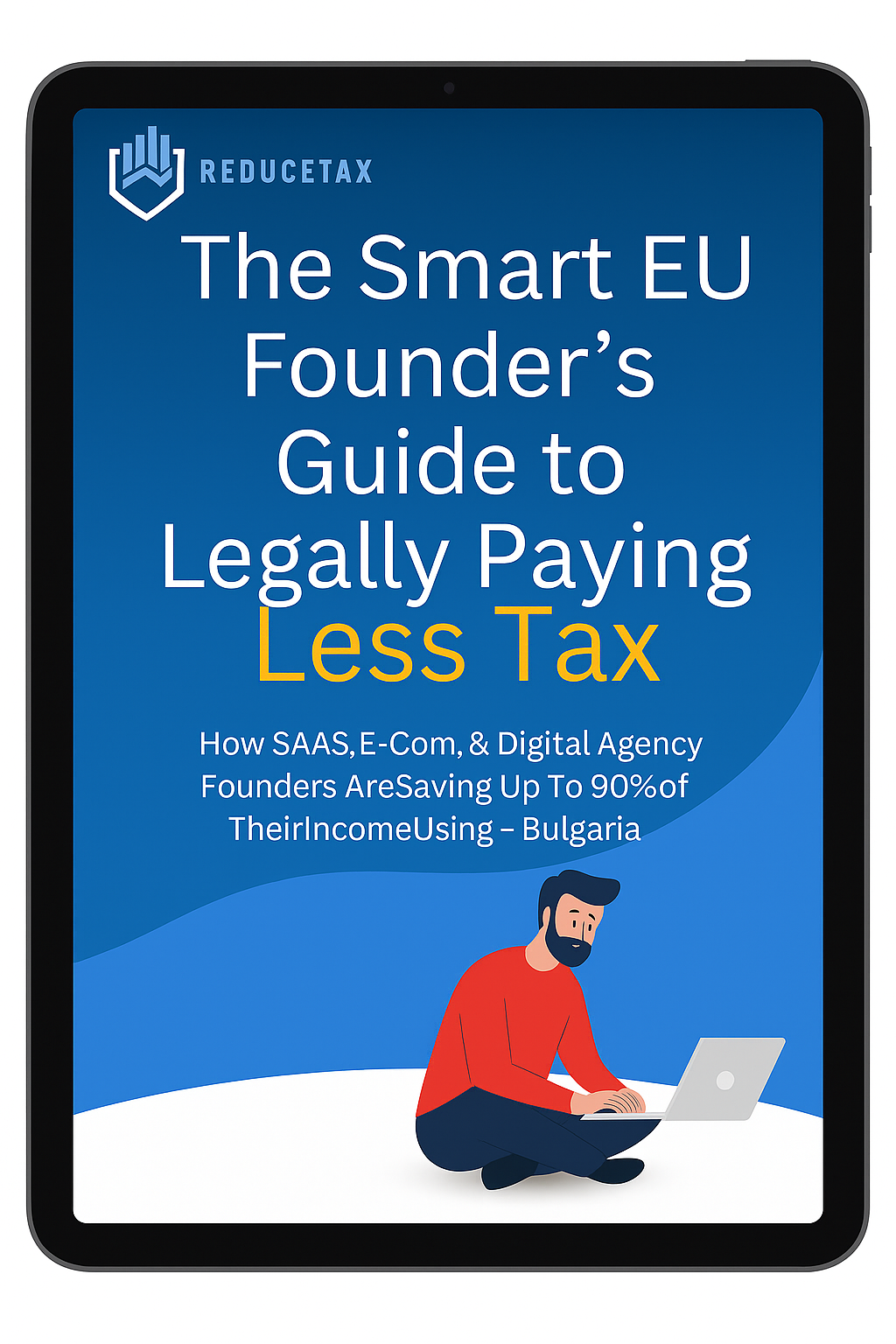
The Smart EU Founder's Guide to Legally Paying Less Tax
If you're an EU founder in France, Germany, Belgium or another high-tax country, you might be giving away up to 60% of your profits without realising it.
- Why hundreds of EU founders are moving to smarter tax structures
- How Bulgaria's 10% corporate tax can transform your margins
- Two proven, legal paths to cut taxes without disrupting operations
Ready to Maximize Your Profits?
Book your free discovery call and discover if Bulgaria makes sense for your business structure.
We specialize in helping European businesses legally reduce their tax burden through strategic relocation to Bulgaria and other low-tax EU jurisdictions. Our team of tax professionals and legal experts ensures compliant, effective tax optimization solutions — from company formation to ongoing advisory support.
www.reducetax.eu