
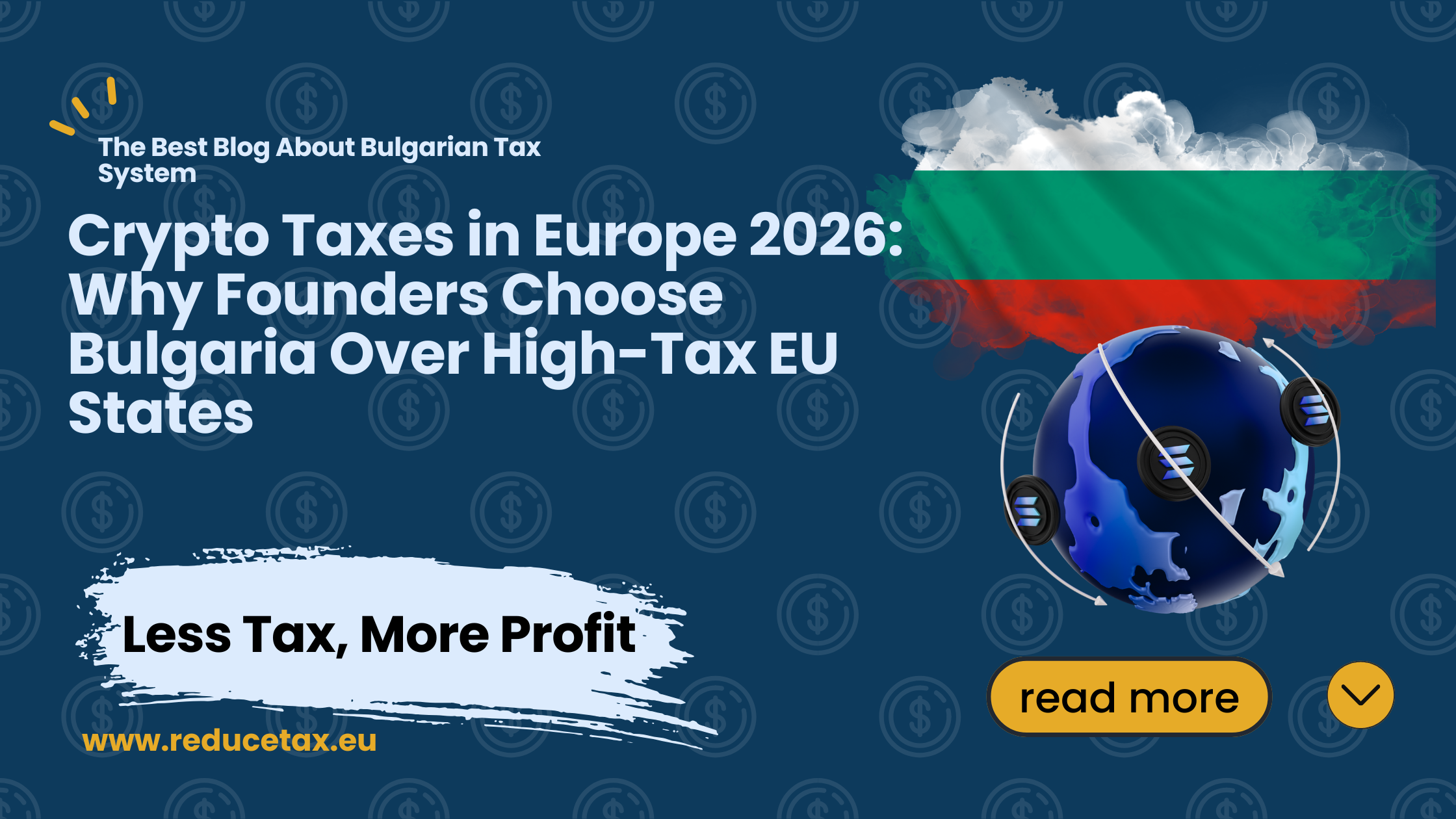
Netherlands Eyes 36% Crypto Gains Tax — Why EU Founders Look at Bulgaria
If you are a digital founder holding crypto as part of your company treasury or personal portfolio, Europe is moving toward more reporting, more transparency, and higher tax pressure in some countries.
36% Tax on Crypto Annual Returns — Planned from 2028
Dutch lawmakers advanced a plan that would tax "actual returns" in Box 3 at 36%, including annual value changes in assets like crypto. It is planned to start in 2028 and still needs Senate approval. Read the full story →
Why founders care: crypto can be volatile. A system that taxes annual value changes can create liquidity stress and force selling just to cover tax bills.
Even if you are not Dutch, this story signals something bigger. High-tax EU countries are under pressure to raise revenue, and mobile capital is an easy target. This is exactly the kind of policy shift that makes founders ask a simple question:
"Where in the EU can I build and invest with stable rules, clean compliance, and a lower, predictable tax base?"
For many, the answer is Bulgaria.
The Bigger Trend in Europe: Transparency Is Now the Default
🔍 The "Privacy" Era of Crypto Is Over
Many founders still think there is a "privacy" angle in crypto. EU reporting and compliance is tightening across the board. Payment reporting and platform reporting have already become normal — and the direction is clear: the EU wants visibility.
That is why the smartest strategy is not to hide. It is to build a clean, defensible structure in a stable EU jurisdiction.
Why Bulgaria Is Attractive for EU Business Owners and Crypto Investors
Bulgaria wins for the same reason it wins for SaaS, agencies, and e-commerce founders: simplicity. But beyond taxes, Bulgaria has quietly become one of Eastern Europe's most vibrant tech hubs — home to fast-growing companies in software engineering, deep tech, and even the space industry.
World-class companies are already building here — which means talent, infrastructure, and a business culture that understands digital founders.
Bulgaria's Flat Tax Rates
A Flat, Predictable Base
This is a baseline system, not a temporary expat regime. It is simple to plan around when you are scaling — no bracket surprises, no annual policy changes threatening your margins.
Crypto Gains for Individuals: Typically Taxed at 10%
Legal guides summarise that gains from selling crypto by individuals are subject to Bulgarian personal income tax at a flat 10%. The exact classification depends on facts and documentation — which is exactly why proper setup matters. Read our full Bulgaria Tax Guide →
An EU Country With the Euro in 2026
Bulgaria uses the euro from 1 January 2026 after the EU Council took the final steps. For founders, this reduces friction in accounting, pricing, and cross-border operations — while keeping the tax benefits fully intact.
Quick Comparison Table for Founders
| Country | Crypto Tax Rate | Corp. Tax | Personal Tax | Policy Trend |
|---|---|---|---|---|
| 🇧🇬 Bulgaria | ~10% | 10% | 10% | Stable |
| 🇳🇱 Netherlands | 36% (planned) | 25.8% | 36–49% | Rising |
| 🇩🇪 Germany | 0% (>1yr) / 25%+ | 30–33% | 14–45% | Uncertain |
| 🇫🇷 France | 30% | 25% | 11–45% | Rising |
| 🇧🇪 Belgium | 33%+ | 25% | 25–50% | Rising |
Note: any country's outcome depends on your residency, structure, and how income is classified. This is why we always map the facts first.
The Founder Use Case That Matters
Most founders don't care about "crypto trader" life. They care about:
- Keeping a treasury allocation in BTC or ETH
- Occasionally taking gains without triggering a tax crisis
- Using profits to reinvest — rather than losing margin to layered taxes
In high-tax countries, the pain is predictable: company tax, then personal tax when you take money out, then more reporting, then more rules. Bulgaria changes the starting point. When structured properly, your company base is simpler and your planning becomes clearer. That clarity is what founders pay for.
What to Watch So Your Structure Stays Safe
If you decide to explore Bulgaria, the real issue is not the tax rate. It is staying compliant.
⚖️ Two Principles That Matter
- Substance and management must match where the company is run — your centre of gravity needs to be genuinely in Bulgaria
- Documentation and reporting must be clean — especially if you are holding digital assets
This is not about tricks. It is about building an EU structure that holds up long-term.
The Takeaway
The Netherlands debate is a signal, not a one-off. EU tax pressure on investment income is rising in several places, and crypto is no longer ignored. Founders who want predictability, lower baseline rates, and a clean EU setup are increasingly looking at Bulgaria because it is simple: flat corporate tax, flat personal tax, and now euro stability in 2026.
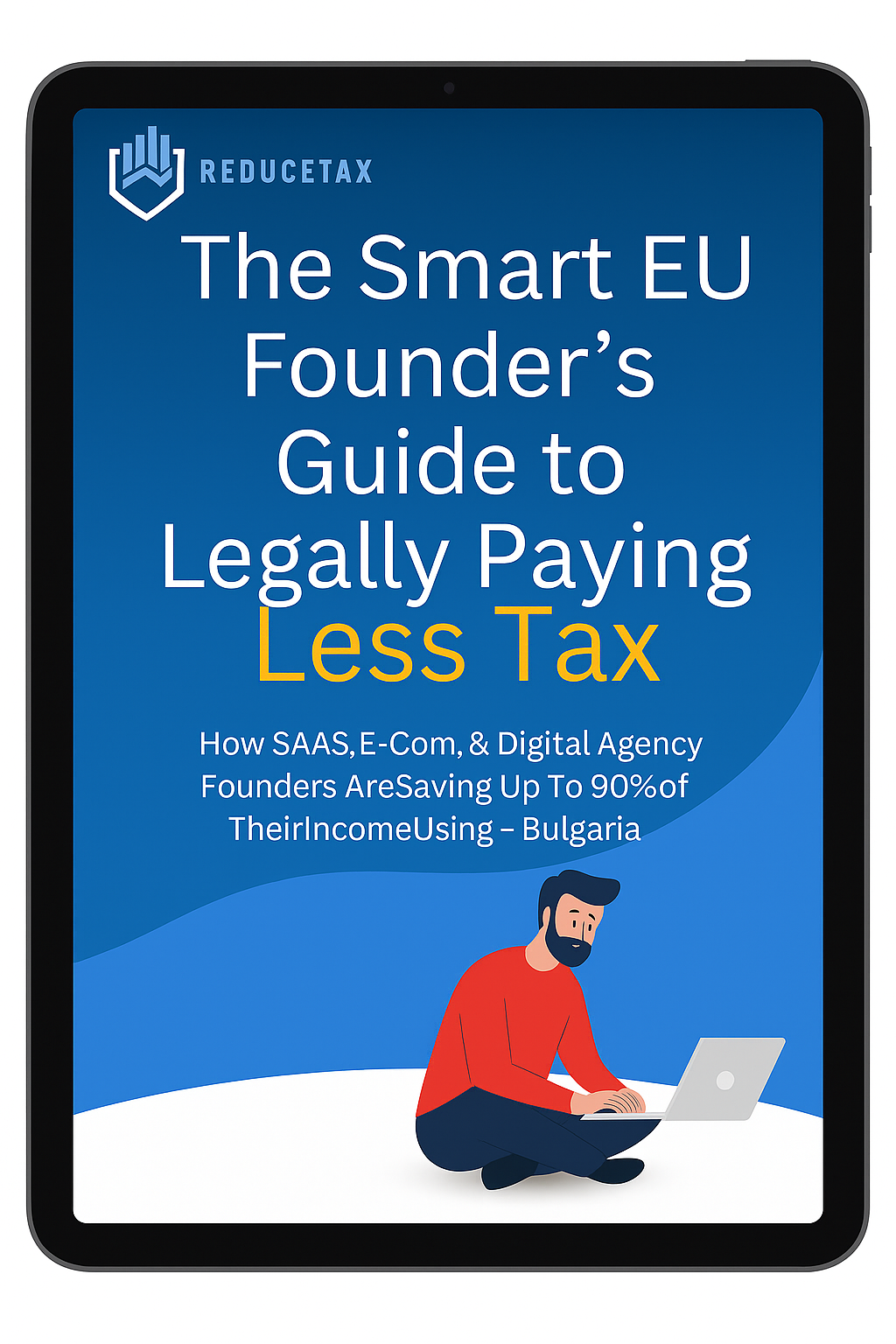
The Smart EU Founder's Guide to Legally Paying Less Tax
If you're an EU founder in France, Germany, Belgium or another high-tax country, you might be giving away up to 60% of your profits without realising it.
- Why hundreds of EU founders are moving to smarter tax structures
- How Bulgaria's 10% corporate tax can transform your margins
- Two proven, legal paths to cut taxes without disrupting operations
Frequently Asked Questions
For individuals in Bulgaria, gains from selling crypto are generally subject to the flat 10% personal income tax. The exact treatment depends on your residency status, the nature of the transaction, and how the income is classified. Proper documentation is essential — this is why we always review your specific situation before advising on a structure.
Yes. Bulgaria adopted the euro on 1 January 2026 following the EU Council's final approval. For founders, this removes currency conversion friction in accounting, pricing, and cross-border transactions — while the flat 10% tax rates remain fully intact.
Dutch lawmakers advanced a plan to tax "actual returns" in Box 3 — which includes investments and crypto — at a flat 36%, based on annual value changes rather than only realised gains. The proposal is planned to start in 2028 and still needs Senate approval. The concern for founders is that taxing unrealised gains can create liquidity stress in volatile markets.
Yes, Bulgarian companies can hold digital assets as part of a treasury strategy. The key is that transactions must be properly documented and reported, and the company must have genuine economic substance in Bulgaria. Our team helps structure this compliantly from day one.
The EU's direction is clearly toward full transparency. Crypto exchanges and platforms operating in the EU are increasingly subject to reporting obligations under DAC8 (the EU's crypto asset reporting framework), which requires automatic exchange of crypto-related data between EU tax authorities. The smart approach is to build a clean, compliant structure rather than rely on any "privacy" assumptions.
Not necessarily. There are two paths: you can open a Bulgarian company while keeping your current residency (useful for corporate-level tax reduction), or become a Bulgarian tax resident to access the full 10% personal income tax on gains. The right path depends on your country of origin, how you hold crypto, and your overall business structure. We map this individually on the free consultation call.
See How This Applies to Your Situation
Book a free 30-minute consultation and we'll map a compliant structure based on your country, business model, and how you hold crypto.
We specialize in helping European businesses legally reduce their tax burden through strategic relocation to Bulgaria and other low-tax EU jurisdictions. Our team of tax professionals and legal experts ensures compliant, effective tax optimization solutions — from company formation to ongoing advisory support.
www.reducetax.eu