How to Pay an EU Remote Team
From a Bulgarian Company
Keep Bulgaria's 10% corporate tax while paying staff in Germany, France, Italy, and beyond. Understand A1 certificates, social security coordination, EOR options, and when a local payroll is required.
Can I Hire Employees Across the EU with a Bulgarian Company?
If you run a SaaS company, digital agency, or e-commerce brand through a Bulgarian entity, you're already benefiting from the EU's lowest corporate tax rate at 10%.
But what happens when you want to hire developers in Germany, sales reps in France, or designers in Spain?
The short answer: Yes, you can hire across the EU and maintain your 10% tax advantage – if you follow the right social security and permanent establishment rules.
This guide shows you exactly how to do it legally, including three practical hiring models, real examples, and compliance watchouts.
What Are the Risks of Hiring EU Employees from Bulgaria?
When hiring remote employees across EU borders, you face two main compliance risks:
What Are the Key EU Rules for Cross-Border Employment?
Requirements:
- Both countries must be signatories to the agreement
- You must apply for an A1 certificate under Article 16
- The employee works the remaining 50.1%+ "for" the Bulgarian employer
Key factors:
- Is the location at the enterprise's disposal?
- Is it a business necessity?
- Does the company control the premises?
What Are the 3 Ways to Hire EU Employees from Bulgaria?
Here are three legally compliant models for building your EU team while keeping Bulgarian 10% corporate tax:
Direct Bulgarian Employment with A1 Certificate
How It Works:
- Employee signs a Bulgarian employment contract
- Employee is insured under Bulgarian social security
- If working up to 49.9% from residence country, you apply for A1 under Article 16
- Employee travels to Sofia for onboarding and periodic collaboration
Watchouts:
- Both countries must be Framework Agreement signatories
- A1 is not automatic – you must file and meet conditions
- Board meetings and key decisions must happen in Bulgaria
Employer of Record (EOR) in Employee's Country
How It Works:
- Your Bulgarian company remains the operating HQ
- EOR becomes legal employer in worker's country
- EOR handles local payroll, taxes, and compliance
- You direct the work; EOR handles administration
Benefits:
- Reduces PE risk from single remote hires
- Faster than opening foreign subsidiary
- Local benefits alignment for employee
Watchouts:
- EOR fees add cost (typically 15-25% of salary)
- Ensure clear IP assignment and confidentiality clauses
Genuine Contractor Agreement
How It Works:
- Contractor invoices your Bulgarian company
- Include strong IP assignment and confidentiality
- Avoid employment-like control and fixed schedules
Real Examples: How to Structure EU Hiring from Bulgaria
How Do I Protect My 10% Bulgarian Tax Rate While Scaling?
Follow these five rules to maintain Bulgarian corporate residence and avoid triggering foreign tax obligations:
What Are Bulgaria's Actual Employment Costs?
Understanding Bulgarian employment costs helps you budget accurately:
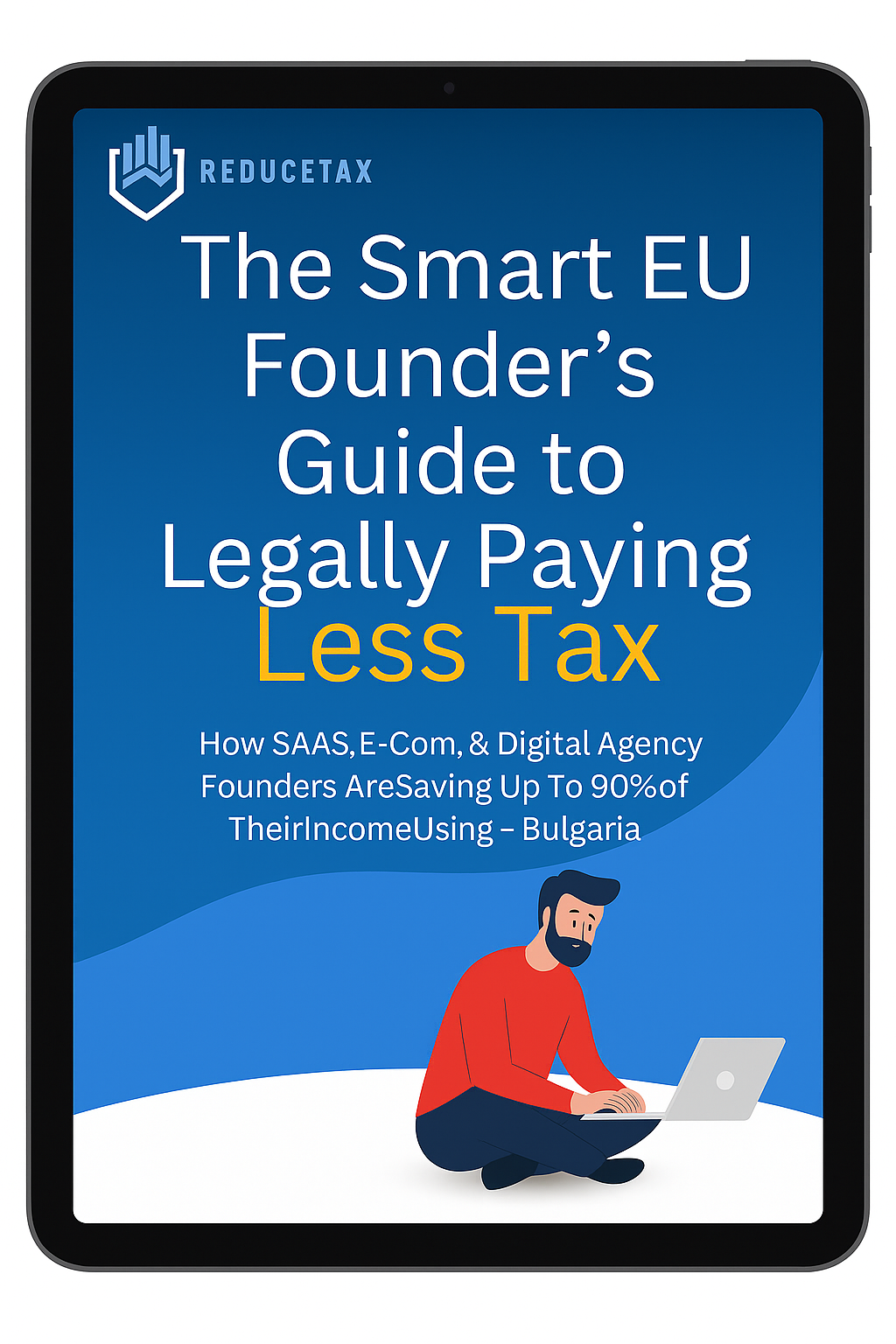
The Smart EU Founder's Guide to Legally Paying Less Tax
If you're an EU founder in France, Germany, Belgium or another high-tax country, you might be giving away up to 60% of your profits without realising it.
- Why hundreds of EU founders are moving to smarter tax structures
- How Bulgaria's 10% corporate tax can transform your margins
- Two proven, legal paths to cut taxes without disrupting operations
Frequently Asked Questions
Yes. The A1 is the official document proving which country's social security applies. Without it, the employee's residence country can claim contributions, potentially doubling your costs.
If they exceed 49.9% of work time in their residence country, social security typically switches to that country under baseline EU rules (Regulation 883/2004). In this case, use an EOR or establish a local entity.
It's fact-dependent. The 2025 OECD guidance narrows when a home office equals a fixed place PE, but you must avoid giving that location the attributes of a company-controlled office (no public listings, no required customer meetings there).
Yes, absolutely. You remain fully inside the EU financial system. Your payment processor setup does not conflict with Bulgarian corporate residence.
Most EU member states are signatories. Check the current list on the European Commission's social security coordination website or consult with a Bulgarian tax advisor before structuring employment.
Ready to Maximize Your Profits?
Book your free discovery call and discover how to build your EU remote team while maintaining Bulgaria's 10% corporate tax.
We specialize in helping European businesses legally reduce their tax burden through strategic relocation to Bulgaria and other low-tax EU jurisdictions. Our team of tax professionals and legal experts ensures compliant, effective tax optimization solutions — from company formation to ongoing advisory support.
www.reducetax.eu